
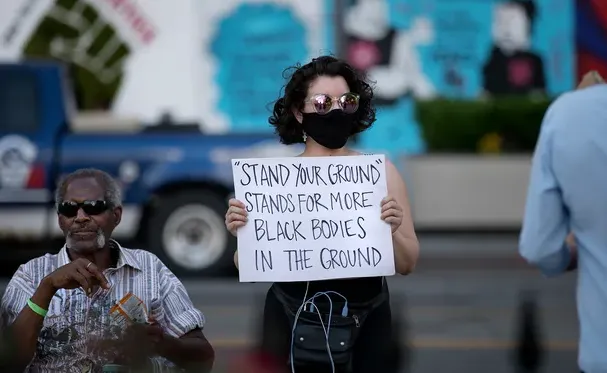
In September 2026, Broward County prosecutors announced that Melissa Payne would not face charges for shooting Bart Diguglielmo during a parking dispute outside a Florida Walmart. The decision rested on Florida’s self-defense statute, and it landed in a country that remembers very different outcomes for Black defendants. For many readers, the case raises an uncomfortable question about fairness. This article examines what happened, what the prosecutor’s memo concluded, and why a stand your ground Black woman cleared USA story carries such weight for communities long skeptical of how the law is applied.
What Happened in the Walmart Parking Lot
The shooting occurred on June 30, 2026, at a North Lauderdale Walmart after an argument over a parking space. Bystander video showed Diguglielmo, a 62-year-old Army veteran, walking quickly toward Payne as she backed away and drew a gun from her car. She remained at the scene and cooperated with detectives, telling them she acted in self-defense. Diguglielmo died of his wounds the following day. The footage, along with witness accounts, became the central evidence that investigators weighed in deciding whether her fear of harm was reasonable.
The Prosecutor’s Memo and the Legal Reasoning
Homicide Trial Unit Deputy Chief Stephen Zaccor wrote that Payne had no duty to retreat and could use deadly force if she held a reasonable fear of death or great bodily harm. He described the dispute as tragic and absurd, yet concluded no evidence disproved her fear. The state attorney’s office also found her statement to police consistent with the video. Under Florida law, a person need not wait to be attacked before responding with force, which meant the prosecution lacked a basis to proceed. Payne was therefore declared immune from prosecution.
Who Carries the Burden of Proof
A central point in the memo concerned who must prove what. Zocor noted that Payne did not have to show she was immune; instead, prosecutors had to prove she was not. That allocation sits at the heart of burden of proof self defense law USA debates, and it varies by state. Florida requires the state to overcome a justified-force claim by clear and convincing evidence once immunity is raised. In this case, prosecutors concluded they could not meet that standard, so the case ended before any charge was filed.
The History That Shapes the Reaction
Many observers immediately compared Payne’s outcome with Marissa Alexander’s. Alexander, who fired a shot during an argument with her estranged husband in Jacksonville, was denied immunity and sentenced to twenty years. An appeals court later ordered a new trial because jurors were wrongly instructed on self-defense. Her case became a symbol of how the same Florida statute can produce starkly different results. Against that backdrop, Payne’s outcome struck many readers across the country as a rare acknowledgment that a Black woman’s fear can be credited as reasonable.
A Counterpoint: Lorincz and Unequal Outcomes
The statute has not shielded everyone. In 2024, a Florida jury convicted Susan Lorincz, a white woman, of manslaughter for shooting through her apartment door and killing Ajike Owens, a Black mother. That verdict showed that juries can reject self-defense claims when the facts do not support them. Still, data cited by Atlanta Black Star showed white women who killed Black men were most likely to be ruled justified. Critics therefore argue that results depend heavily on who the defendant and victim are, not only on evidence.
What the Outcome Does and Does Not Prove
One decision cannot settle a national debate. Prosecutors reviewed this evidence and applied the statute as written, which is how the law is supposed to function. Yet a single fair result does not erase the disparities documented in earlier cases, nor does it answer the grief of Diguglielmo’s loved ones, who lost him over a parking space. Readers should resist treating the outcome as either vindication or scandal. The better lesson is that consistent standards, transparent reasoning, and scrutiny of every self-defense claim matter enormously.
Conclusion
The decision not to charge Melissa Payne shows how Florida’s law operates when prosecutors find that video, witnesses, and a consistent statement support a reasonable fear. It also reminds us why history makes Black communities watch these cases closely. At bfacollective.com, we believe fairness means applying the same rigorous standards to every defendant and every victim, regardless of race or gender. Keep asking hard questions, keep demanding transparency from prosecutors and courts, and remember that justice is measured by consistency across cases, not by any single headline.